
JAKARTA | MEDIAISTANA.COM | FRIDAY, NOVEMBER 27, 2026
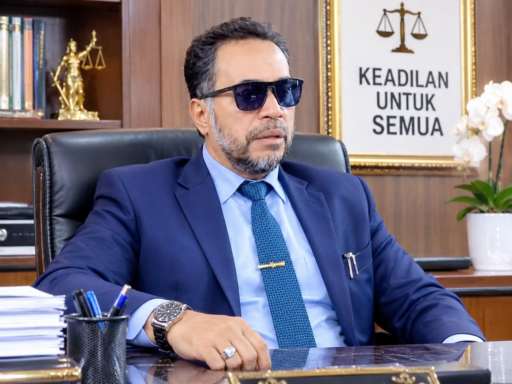
The KM 50 case has once again become a subject of public attention. International lawyer Erles Rareral, S.H., M.H., is urging law enforcement authorities to thoroughly examine the case and ensure that all relevant facts are brought to light. He stressed that the matter must not remain an unresolved public controversy without transparency, accountability, and legal certainty.
Erles emphasized that the KM 50 incident is not a trivial matter that can simply be considered closed through public statements, denials, or exchanges of accusations. The case concerns human lives, the enforcement of law, public confidence in state institutions, and respect for human rights. The public deserves clear, objective, and accountable explanations based on evidence and applicable legal procedures.
According to Erles, the rule of law must apply equally to everyone, regardless of rank, position, authority, or political influence. No individual or institution should receive special treatment that places them beyond legal accountability. Anyone suspected of having a connection to a legal violation must be examined based on sufficient evidence and in accordance with the law.
“What we must pursue is the material truth. Anyone involved, regardless of their position or rank, must be examined based on evidence and applicable legal provisions. The law must not be harsh toward ordinary citizens while becoming powerless when dealing with those who hold positions of authority,” Erles Rareral stated.
He further stressed that justice must never be sacrificed for political interests, the pursuit of power, or the protection of particular institutions. Statements made by Dudung regarding his readiness to resign if proven involved, his willingness to become a witness if required, and his intention to pursue legal action against parties he considers to have defamed him must be addressed through lawful procedures and respect for due process.
For Erles, the fundamental issue is not simply who denies allegations, who challenges others, or who declares a willingness to resign. The central questions are whether all relevant facts have been examined, whether witnesses have been properly questioned, and whether all evidence connected to the KM 50 incident has been objectively reviewed. The public needs answers supported by facts, not merely competing statements in the media.
Erles is calling on law enforcement authorities not to close the door to further investigation if new evidence emerges or sufficient legal grounds exist to pursue additional proceedings. He identified six important areas requiring serious attention: First, a comprehensive review of the chronology of the KM 50 incident, supported by documents, witness statements, and legally admissible evidence. Second, the examination of all parties with relevant connections, without preferential treatment and in accordance with legal procedures. Third, an investigation into any possible chain of command, including evidence of orders, involvement of other parties, or the responsibility of officials.Fourth, a professional and transparent examination of all relevant evidence, including documents, recordings, and witness testimonies. Fifth, the investigation of possible procedural violations, unlawful conduct, or abuse of authority. **Sixth**, the protection of the rights of victims’ families and the provision of legal certainty through a fair and accountable process.
Public aspirations also call for the attention of President of the Republic of Indonesia Prabowo Subianto, urging the government to uphold the supremacy of law and protect human rights without discrimination. The Indonesian National Police, the Attorney General’s Office, the National Commission on Human Rights (Komnas HAM), and other relevant oversight institutions are expected to exercise their respective authorities professionally, independently, and transparently.
The President, as head of state, is expected to ensure that all law enforcement institutions operate in accordance with the Constitution and that no individual receives preferential protection from legal accountability. The public is not demanding that anyone be punished without evidence. However, citizens also do not want power or institutional influence to become a shield against legitimate legal scrutiny.
Erles also reminded the public that criticism must not automatically be interpreted as an attack against state institutions. In a democratic country, citizens have the right to express opinions, question public authorities, and oversee government activities within the framework of the law. Every allegation must have a responsible factual basis. There must be no unilateral judgment, defamation, or criminalization of individuals who lawfully express criticism. At the same time, protecting an institution’s reputation must never become an excuse to obstruct the disclosure of facts.
State institutions will earn greater public trust when they demonstrate the courage to disclose relevant facts, conduct evaluations, and take appropriate action against anyone proven to have committed a violation.
Erles also referred to Article 27 Paragraph (1) of the 1945 Constitution of the Republic of Indonesia, which guarantees equality of all citizens before the law and government. Article 28D Paragraph (1) further guarantees fair legal certainty and equal treatment before the law. These constitutional principles establish that no individual should consider themselves above the law, regardless of rank, position, or influence.
“Peace does not come from allowing injustice to continue. Peace comes when the truth is uncovered, the law is upheld, and the rights of victims are protected. We are not asking for anyone to be punished without evidence, but neither should anyone escape accountability if they are proven to have violated the law,” Erles concluded.
He reaffirmed that there must be no fabrication of evidence, no unlawful criminalization, no protection for parties proven to have committed violations, and no judgment without sufficient evidence. Every individual must receive fair, transparent, and non-discriminatory legal treatment.
The public is now waiting for law enforcement authorities to demonstrate their commitment to answering the questions surrounding the KM 50 case. The demand is clear: all relevant facts must be examined, legal accountability must be upheld, and the rights of victims and their families must be respected.
ERLES RARERAL, S.H., M.H.
International Lawyer and Observer of Law Enforcement in Indonesia.
Upholding Public Aspirations, Uncovering the Facts, and Safeguarding the Supremacy of Law.
MEDIAISTANA.COM
EDITOR: David E. SE.
